
Last updated November 23, 2026
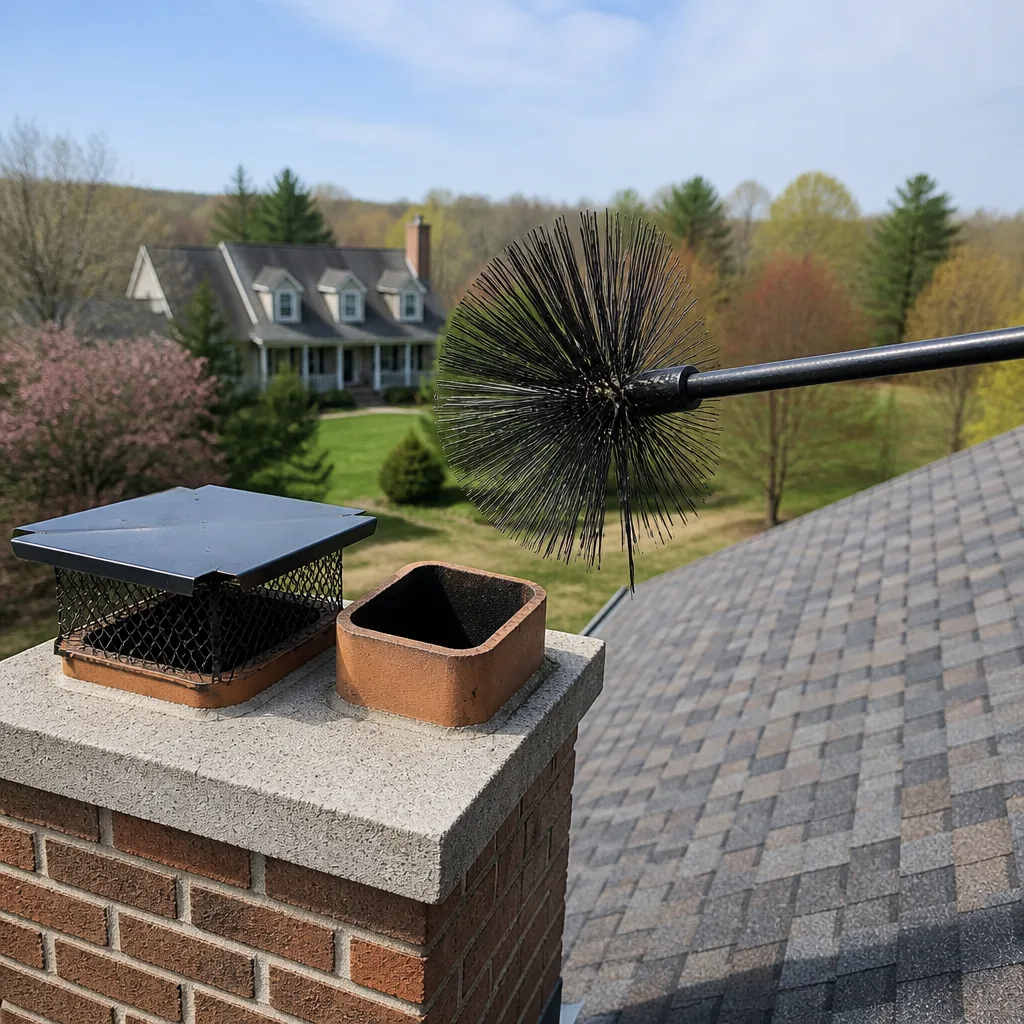 Sweep & inspection
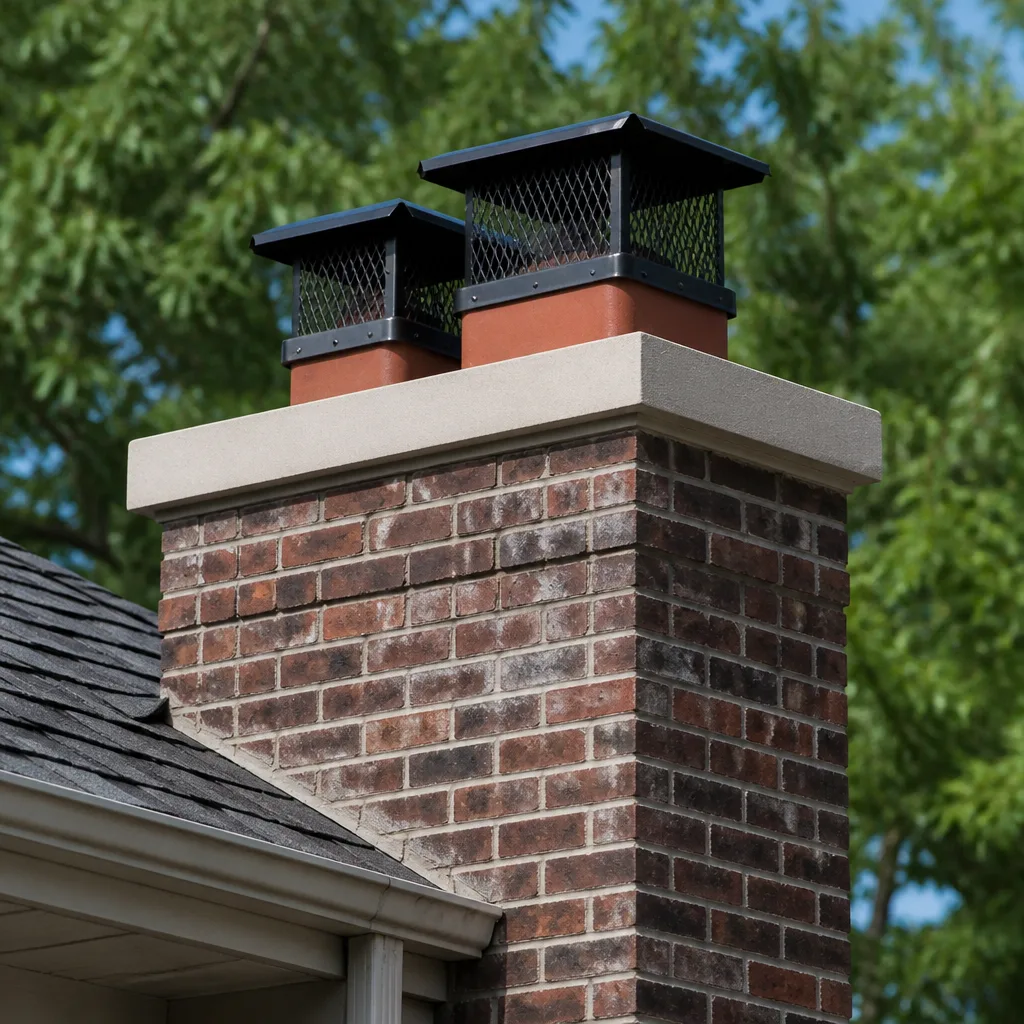 Caps & crowns
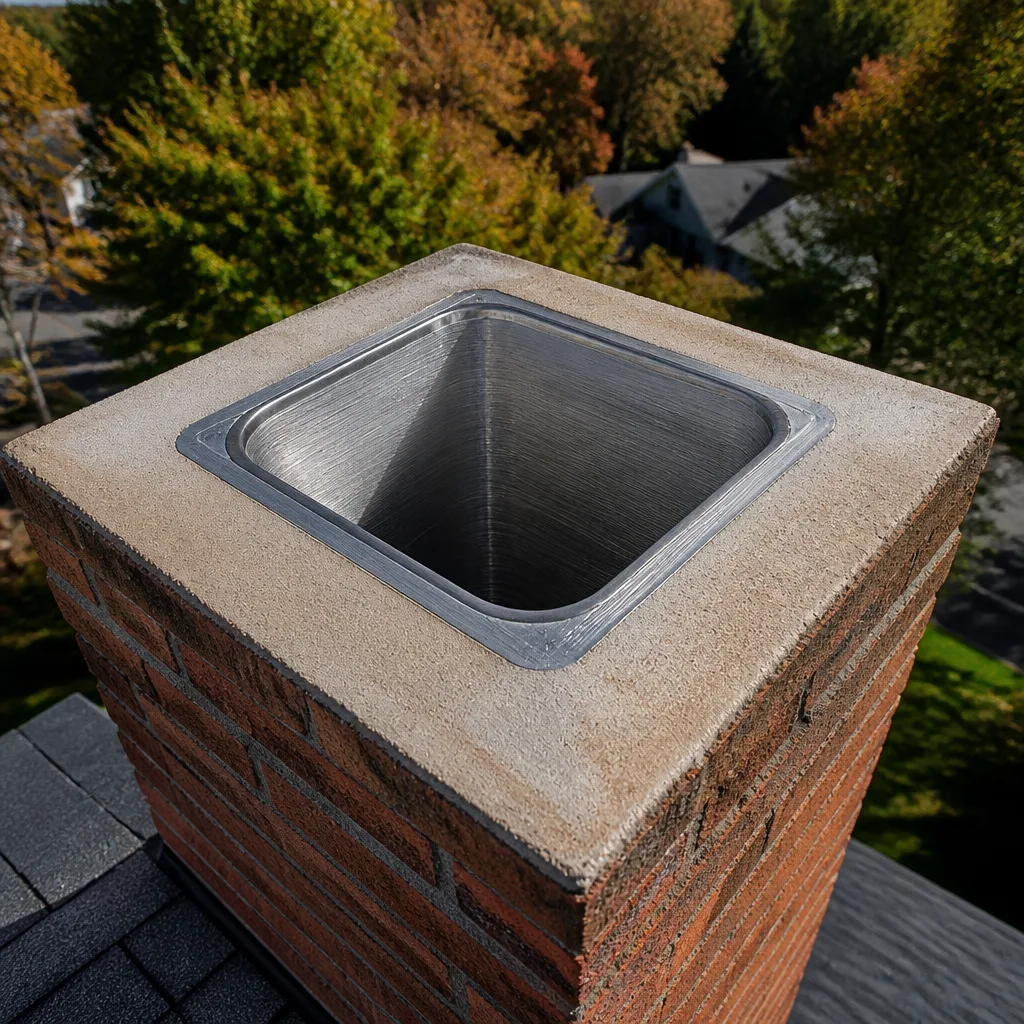 Flue relining
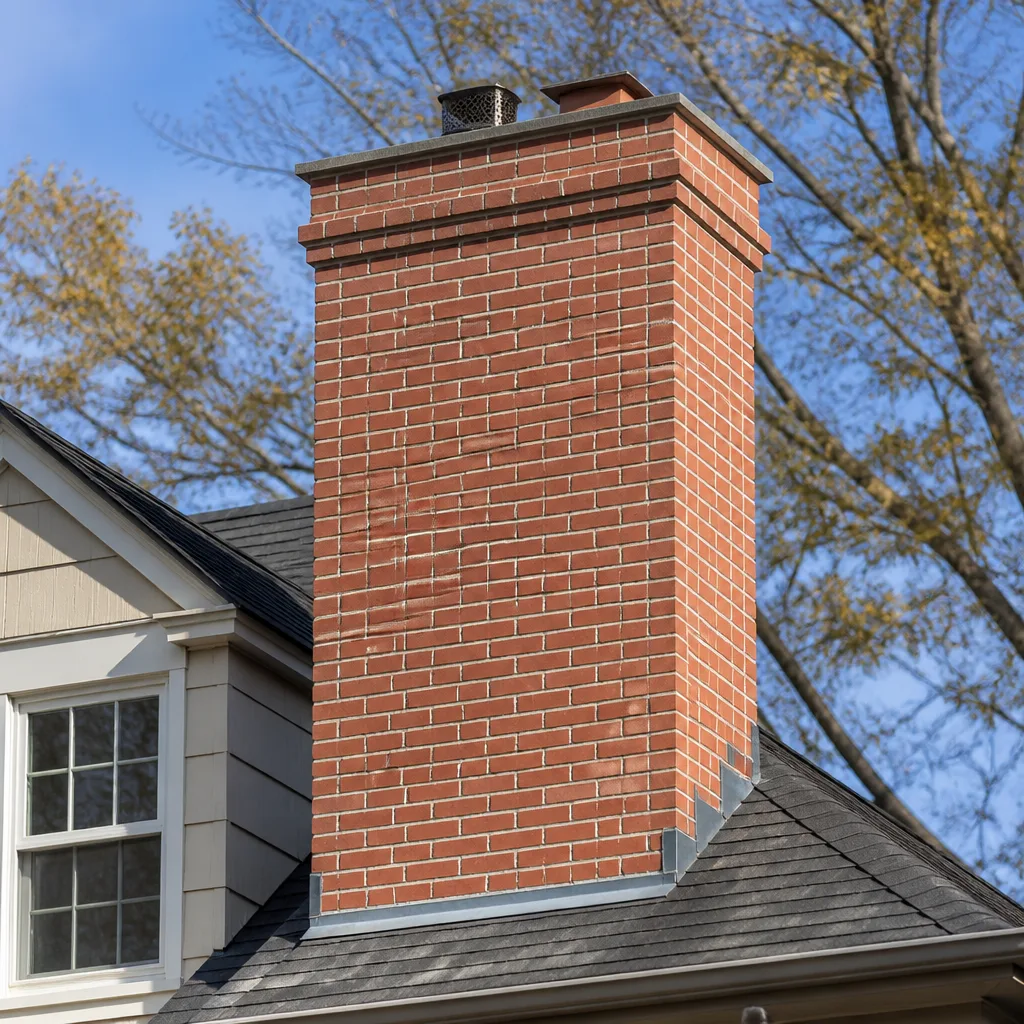 Masonry repair
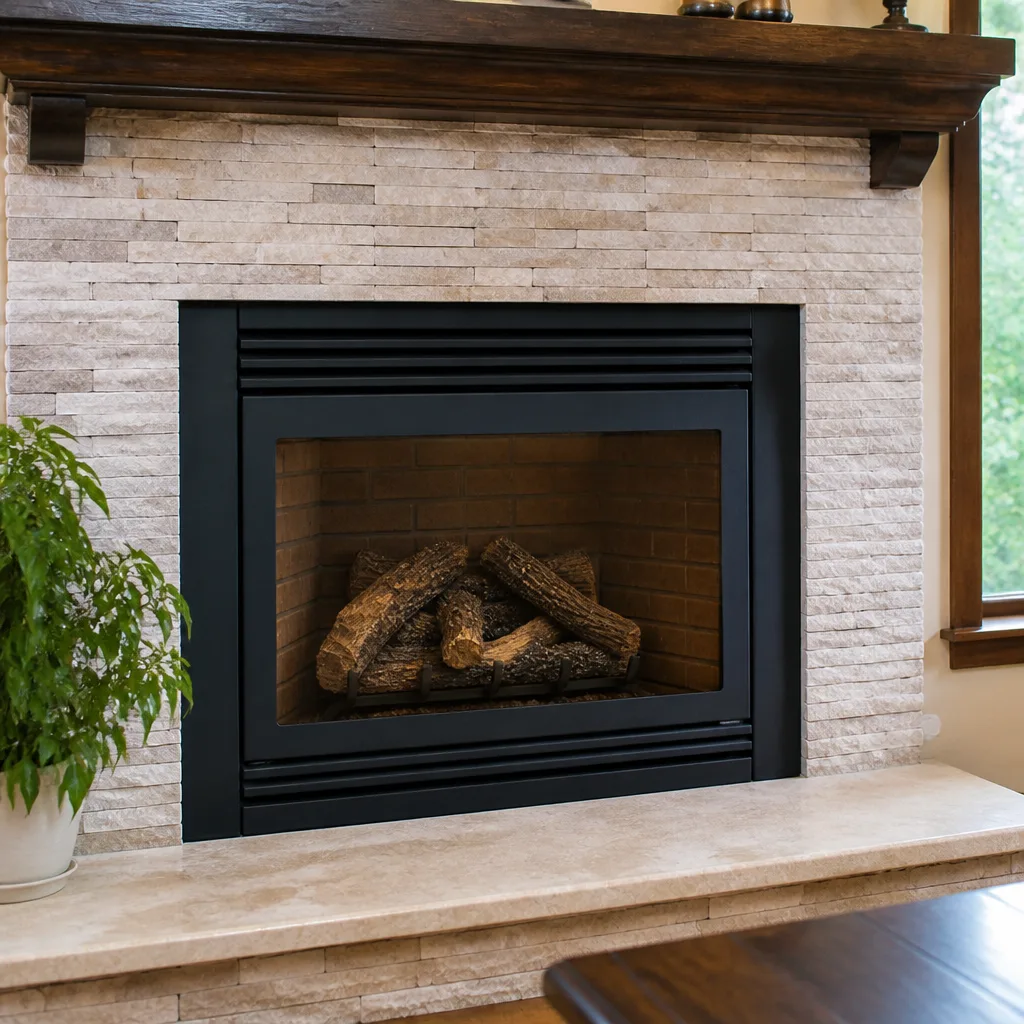 Gas fireplace service
Level 1 sweep and inspection to the NFPA 211 annual standard - flue, crown, cap, and flashing checked and photographed
Chimney sweep logs do not sweep chimneys. They loosen some creosote - which then falls where a brush and vacuum still have to collect it.
The Complete Guide to Chimney Cleaning in Harvey Park
Most people think a chimney sweep is the finish line. You book it, a brush goes up the flue, the soot comes down, and the job is done until next year. That’s the common picture, and it’s the one we spend the most time correcting. In our experience, the sweep is actually the starting line. It’s the moment the flue gets clean enough that you can finally see what’s going on inside it: cracked tiles, failing mortar joints, a crown that’s been quietly letting water in. And that distinction matters more in Harvey Park than in most places. This guide walks you through what a real cleaning reveals, how inspections are leveled, what creosote stages actually mean, and how to read the report you get back.
Quick Answer
Chimney cleaning in Harvey Park means more than brushing out soot. It’s a sweep plus an inspection that tells you the condition of the flue, the crown, and the firebox, and a thorough cleaning is usually recommended once a year for a regularly used fireplace, or more often with heavy use. In Harvey Park’s mid-century housing stock, the inspection is the part that frequently uncovers the real issue, because many of these flues have never been examined beyond a surface glance.
Styles & brands we work with
- Sweep & inspection
- Caps & crowns
- Flue relining
- Masonry repair
- Gas fireplace service
Table of Contents
- Why Harvey Park Chimneys Present Specific Challenges
- Level 1, Level 2, and Level 3 Inspections Explained
- What Creosote Stages Look Like and Why They Matter
- What Actually Happens During a Chimney Cleaning
- How to Read a Post-Sweep Report
- Why a Chimney Specialist Finds What a Generalist Misses
- Caps, Crowns, and the Water Damage Chain
- Building a Cleaning Schedule That Fits Your House
Why Harvey Park Chimneys Present Specific Challenges
Harvey Park was largely developed between the 1950s and 1970s, and that single fact shapes almost everything we find inside the chimneys here. The ranch homes and split-levels built during that stretch were constructed with clay tile liners, mortar crowns, and masonry fireboxes, and many of them have never had their liners professionally inspected beyond a quick look from the damper. A surface sweep won’t show you what’s happening on the inside of those tiles.
Three specific configurations come up again and again in this neighborhood:
Dual-use fireplaces. Plenty of mid-century homes here were built with a fireplace that was meant to serve more than one room, or with a firebox that shares a chimney chase with a furnace or water heater flue. When two appliances vent into the same chase, the smaller flue can be starved for draft, and the joint where they meet is a common place for gaps and corrosion to start. A sweep that ignores the second flue isn’t really cleaning the chimney.
Offset flues. Ranches from this era often have a flue that jogs around a framing member or a roofline, rather than running straight up. Those offsets are harder to brush cleanly and harder to inspect, and they collect creosote at the bend. If your sweep technician only works the straight run, the offset is where the trouble hides.
Aging mortar crowns. The crown is the concrete cap at the very top of the chimney that sheds water away from the flue. After several decades of freeze-thaw cycles along the Front Range, hairline cracks open up, water gets behind the crown, and the freeze expands those cracks a little more each winter. A cracked crown is the leading cause of preventable chimney water damage, and it’s almost never visible from the ground.
None of this means every Harvey Park chimney is in trouble. It means the odds of finding something worth fixing are higher here than in newer construction, and the only way to know is to look properly. That’s why we treat chimney sweep work as inspection-first, every time.
Level 1, Level 2, and Level 3 Inspections Explained
The National Fire Protection Association’s standard 211 defines three levels of chimney inspection, and the level you need depends on what’s changing, not on how much you want to spend. Here’s what each level means for a typical 1960s Denver-area home.
Level 1 Inspection
A Level 1 inspection is the standard check that comes with a routine sweep. The technician looks at all the readily accessible parts of the chimney and venting system: the firebox, the damper, the visible portion of the flue, the chimney exterior where it can be seen, and the connections to the appliance. No tools that require opening anything up, no camera. This is appropriate when nothing has changed: same appliance, same fuel, no known problem, and the chimney has been serviced regularly.
Level 2 Inspection
A Level 2 inspection is what most Harvey Park homes actually need at least once, and it’s the one we recommend after any change in how the chimney is used. That includes a new appliance, switching from wood to gas, a chimney fire (even a small one), a sale or transfer of the property, or any sign of a problem like smoke backdrafting. A Level 2 includes everything in a Level 1 plus a camera inspection of the flue interior, access to concealed areas like attics and crawl spaces where the chimney passes through, and a look at the chimney from the roof. On a 1960s ranch with clay tiles, the camera is what tells you whether those tiles are cracked, spalling, or still sound.
Level 3 Inspection
A Level 3 inspection is the most involved and is only warranted when a Level 1 or Level 2 has identified a serious hazard that can’t be assessed any other way. It can involve removing parts of the chimney or the building around it to get at concealed areas. In our experience, a Level 3 is rare, and it should never be recommended without the Level 2 findings that justify it in writing.
Here’s the practical version for a Harvey Park homeowner:
- If your fireplace is swept annually and nothing has changed, a Level 1 is usually enough.
- If you’ve never had a camera inspection and your home dates to the mid-century build-out, ask for a Level 2 the first time.
- If a Level 2 camera inspection reveals a defect, the next step is a repair estimate, not automatically a Level 3.
- If anyone recommends a Level 3 without showing you the Level 2 findings, ask why before agreeing.
What Creosote Stages Look Like and Why They Matter
Creosote is the residue that condenses on the inside of a flue when wood burns incompletely, and it builds up in three recognizable stages. The stage matters because it determines whether a standard brush can remove it or whether the flue needs a different kind of treatment entirely.
- Stage 1 creosote looks like soot or a light, flaky dusting. It brushes off easily with normal sweep tools. This is the routine situation and the reason an annual cleaning keeps things in good shape.
- Stage 2 creosote is a crusty, hardened deposit that clings to the flue walls. A standard brush can remove some of it but often skips over the tougher patches. Stage 2 is a warning sign: it means the fire has been burning cool or wet enough to condense creosote rather than burn it off.
- Stage 3 creosote is the glazed, shiny, tar-like coating that’s baked onto the flue. It’s the most combustible stage and the hardest to remove. A brush alone won’t take it off. Stage 3 usually calls for a specialized rotary treatment, and in our work we turn to a ceramic resurfacing system like HeatShield when the flue surface itself has been compromised underneath.
Stage 2 and stage 3 deposits are more than a cleaning problem. They’re a fuel source sitting inside the flue, and they’re a signal that the burning habits, the wood quality, or the draft in that chimney need attention. If your flue reads as stage 2 or stage 3, the conversation should shift from “how do we brush this off” to “why is this forming, and what does the flue look like underneath it.”
Wood choice alone drives a lot of this. Burning unseasoned wood, or wood that’s been sitting out uncovered, produces more creosote than properly dried firewood. Cool, smoldering fires do too. A flue that’s sized for the appliance vents better when the fire burns hot and clean. When the fire is choked down to stretch the wood, creosote condenses on the cooler flue walls. The cleaning reveals the result.
What Actually Happens During a Chimney Cleaning
A professional cleaning follows a predictable sequence, and knowing the steps helps you evaluate whether the work you’re getting is thorough. Here’s how a proper sweep typically runs:
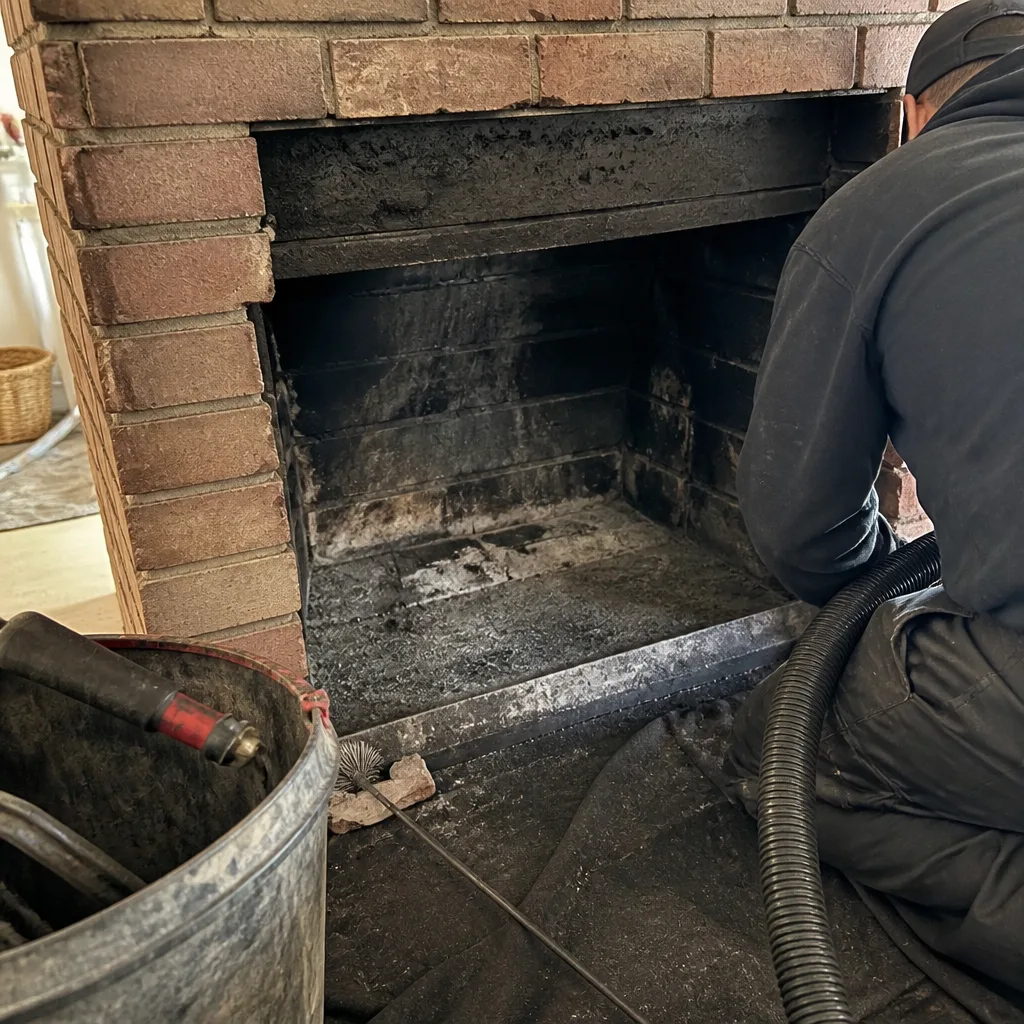
- Setup and protection. Drop cloths go down over the hearth and the floor around it, and a vacuum with a HEPA filter runs throughout to keep soot out of the room.
- Firebox and damper check. The technician opens the damper, checks that it operates, and clears any debris from the firebox before the flue work begins.
- Flue brushing. The flue is cleaned from the bottom up or the top down, depending on the chimney’s configuration, using brushes sized to the flue. Offsets and bends get individual attention.
- Creosote assessment. As the brush comes back down, the technician reads the residue to identify the creosote stage and whether more than brushing is needed.
- Camera inspection. A camera run up the flue captures the condition of the liner, the joints, and the smoke chamber. This is the step that separates a cleaning from a real service.
- Exterior and crown check. The chimney is examined from the roof: crown, cap, flashing, and the masonry joints.
- Report and photos. Findings are documented with photos so you can see what the technician saw.
That last step is where a lot of the value lives. A chimney sweep is a cleaning. A chimney service includes the inspection and the written record that tells you what the cleaning revealed. We treat both as part of the same visit, because a clean flue with a cracked tile in it isn’t a safe flue. It’s just a clean one. The Chimney Sweep Harvey Park approach is built around that distinction: the sweep is what gets you to the inspection.
How to Read a Post-Sweep Report
When the cleaning is done, you should get a report. The question is how to tell whether what’s in it is routine or urgent. Here’s a practical way to sort it:
Routine findings are the things that are expected on a chimney of a certain age and don’t need action right now:
- Light soot or stage 1 creosote in the flue
- Minor surface wear on the firebox brick
- A small amount of ash or debris in the smoke shelf
- Older but intact clay tiles
Watch-list findings need attention soon but not in a panic:
- Hairline cracks in the crown that will get worse with freeze-thaw cycles
- Slight gaps at tile joints that a camera confirms are still holding
- A cap that’s loose or slightly misaligned
- Stage 2 creosote that was largely removed but left residue behind
Urgent findings mean the chimney shouldn’t be used until the issue is addressed:
- Stage 3 glazed creosote that couldn’t be fully removed
- Cracked, spalling, or displaced flue tiles
- Missing mortar joints between tiles, or gaps that expose the surrounding masonry
- A cracked or crumbling crown with visible water intrusion behind it
- Blockages from nests, debris, or a collapsed liner section
- Signs of a prior chimney fire, such as warped components or discolored metal
Two rules help you read a report well. First, the photos should match the findings. If the report says the crown is cracked, there should be a photo of the crown. Second, nothing should be recommended without evidence you can see for yourself. A lot of homeowners have been told they need a full reline on the strength of a verbal claim and no picture. A camera inspection and photo report included with the cleaning is what removes that doubt. And when the findings are routine, a good report will say so, because telling a homeowner that work can safely wait is part of doing the job honestly.
Why a Chimney Specialist Finds What a Generalist Misses
A general handyman can run a brush up a flue. What a generalist typically doesn’t carry is the equipment and the product knowledge to recognize and address what the brush reveals. Chimneys are all we do, and the difference shows up in a few specific places.
The camera run. A cleaning without a camera inspection is a cleaning with a blind spot. A specialist runs a camera as a matter of routine, not as an add-on, because the interior of the flue is where the important findings live.
The materials. When a flue needs relining, the liner system matters. We work with professional-grade systems like DuraFlex for flexible stainless relining and Olympia Chimney for insulated liners, and we stock both because a full reline job shouldn’t be a special order. A generalist who doesn’t carry those systems either won’t recommend the reline or won’t do it with the right material.
Liner resurfacing. HeatShield is the industry’s leading ceramic resurfacing system for liner repair, and most chimney companies never stock or offer it. It lets us repair a flue that would otherwise need a full reline in cases where the structural condition allows it. That option simply doesn’t exist in a generalist’s toolkit.
Cap and crown work. These are the protective components that prevent the most expensive long-term chimney damage, and they need to be fitted precisely. We treat them as a specialty rather than an afterthought.
Configuration knowledge. Dual-use fireplaces, offset flues, and the specific masonry patterns that show up in mid-century ranch construction are things a specialist sees often and a generalist sees rarely. Recognizing a shared chase or a jogged flue is how a small issue gets caught before it becomes a structural one.
That’s the case for a dedicated operator: one crew handles the inspection, the cleaning, the repair, and the reline, with no handoff to a subcontractor mid-project. You get one set of findings, one report, and one point of accountability.
Caps, Crowns, and the Water Damage Chain
Water is the leading cause of preventable chimney damage, and the chain usually starts small. A cap gets knocked loose by wind or a branch. Rain gets into the flue. The flue tiles absorb the moisture, and the next hard freeze expands it. A hairline crack in a tile becomes a larger one, and eventually the flue that was sound at the last cleaning shows up as a problem in the camera run. Along the way, water works on the crown at the top of the chimney, widening cracks that let more water behind it, and on the firebox masonry, where moisture drives spalling.
A chimney cap and crown in good repair break that chain at the first link. The cap keeps water, birds, and debris out of the flue. The crown sheds water away from the top of the chimney and protects the mortar and the structure beneath it. Both are affordable relative to the repair they prevent, and both are visible and verifiable: the technician can show you the crack or the loose cap, and you can see the fix afterward. Our chimney cap & crown work is the proactive side of chimney care, and it’s the part most homeowners don’t think about until there’s water damage to repair.
When the damage has already reached the flue, the right repair depends on what the camera shows. A cracked tile can sometimes be resurfaced with HeatShield. A flue with structural failure may need a full reline with DuraFlex or Olympia Chimney. And when the firebox or the masonry around it has suffered, the work falls under fireplace repair. The point is that each step in the chain has a repair appropriate to it, and knowing which one you’re at keeps you from overpaying for work you don’t need or underpaying for work you do.
Building a Cleaning Schedule That Fits Your House
The general rule for a regularly used wood-burning fireplace is an annual cleaning and inspection. On the Front Range, where the heating season runs long and the freeze-thaw cycles are hard on masonry, sticking to that annual rhythm is the most reliable way to catch problems while they’re still small. Several factors push the schedule tighter:
- Heavy use. If you burn several cords a season, annual may not be enough.
- Gas inserts. A gas insert doesn’t produce creosote, but it does need periodic inspection of the venting and the appliance connections.
- Unseasoned wood. Burning green or damp wood accelerates creosote buildup and shortens the interval between cleanings.
- Older construction. A mid-century flue with clay tiles deserves a camera inspection at least once so you have a baseline to compare against.
- Any change in use. A new appliance, a switch in fuel, or a chimney fire calls for a Level 2 inspection regardless of when the last cleaning was done.
A practical way to stay ahead of it: schedule the cleaning before the heating season, so you’re starting the year with a known-good flue. That way the inspection findings are fresh when you need them, and any repair can be done before the first cold snap. If you’re new to a house in Harvey Park and you don’t know the chimney’s history, the first visit should include a Level 2 inspection with a camera run, so you have a baseline for everything that follows.
Common Mistakes to Avoid
- Skipping the camera inspection. A brush going up and down tells you the flue is cleaner, not that it’s sound. Without a camera, you’re guessing about the tiles, and on a 1960s Harvey Park flue, guessing is exactly the wrong approach.
- Assuming a generalist covers the whole job. A handyman can sweep, but relining, resurfacing, crown work, and structural repair need a specialist with the right materials on hand. A sweep that ends with a “you’ll need to call someone else” referral hasn’t finished the job.
- Treating stage 2 creosote as a cleaning problem only. If a brush didn’t remove it all, brushing again won’t help. Stage 2 and stage 3 deposits need a different treatment and a look at why they formed.
- Ignoring the crown because it looks fine from the ground. You can’t see the crown from the yard. Cracks behind the cap and along the mortar are the most common source of water damage, and they’re only visible from the roof.
- Burning unseasoned or damp wood to save time. It’s the leading contributor to fast creosote buildup, and it makes every subsequent cleaning a harder job on the flue.
- Waiting for a problem before booking the first inspection. In a mid-century home you just bought, a baseline inspection tells you where the chimney stands. That knowledge is worth more than the cost of the visit.
- Accepting a repair estimate without photos. If the findings aren’t documented, you can’t verify them, and you can’t tell whether the work is urgent or can safely wait.
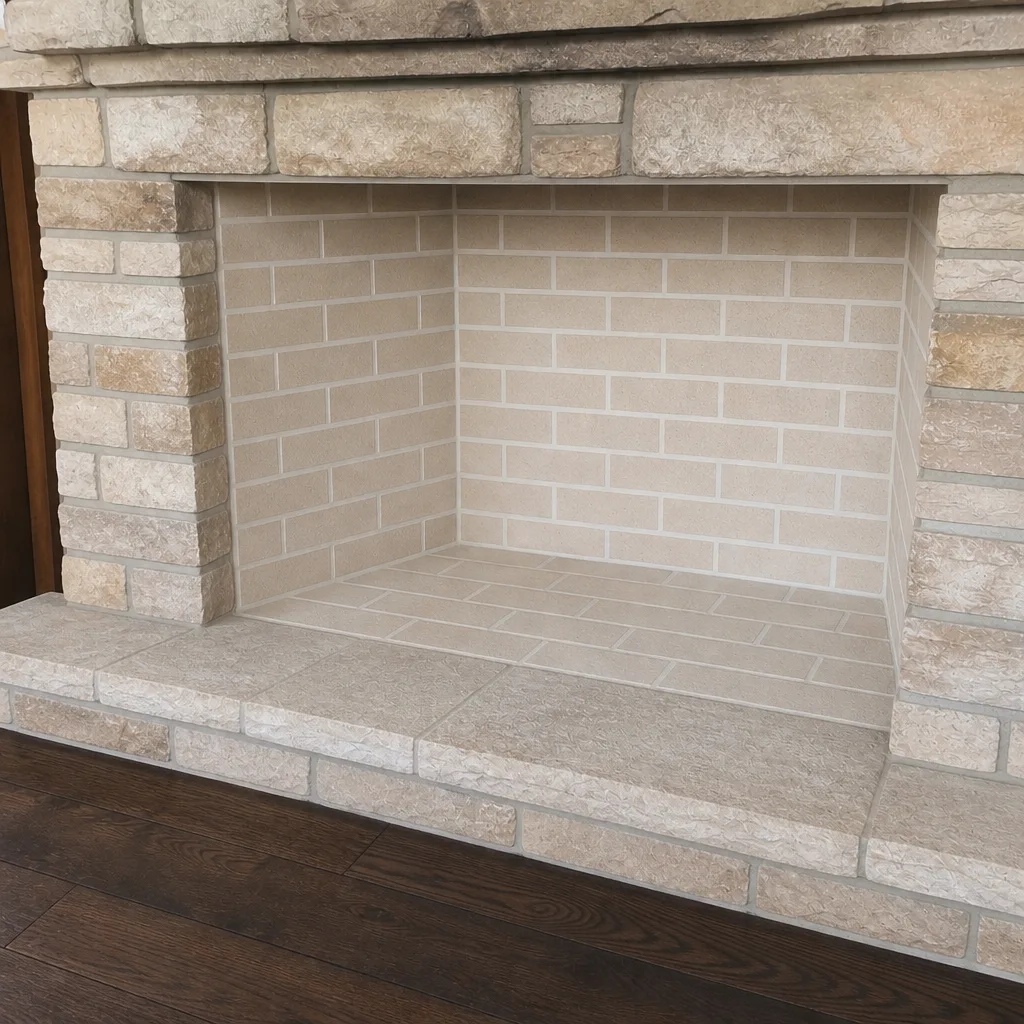
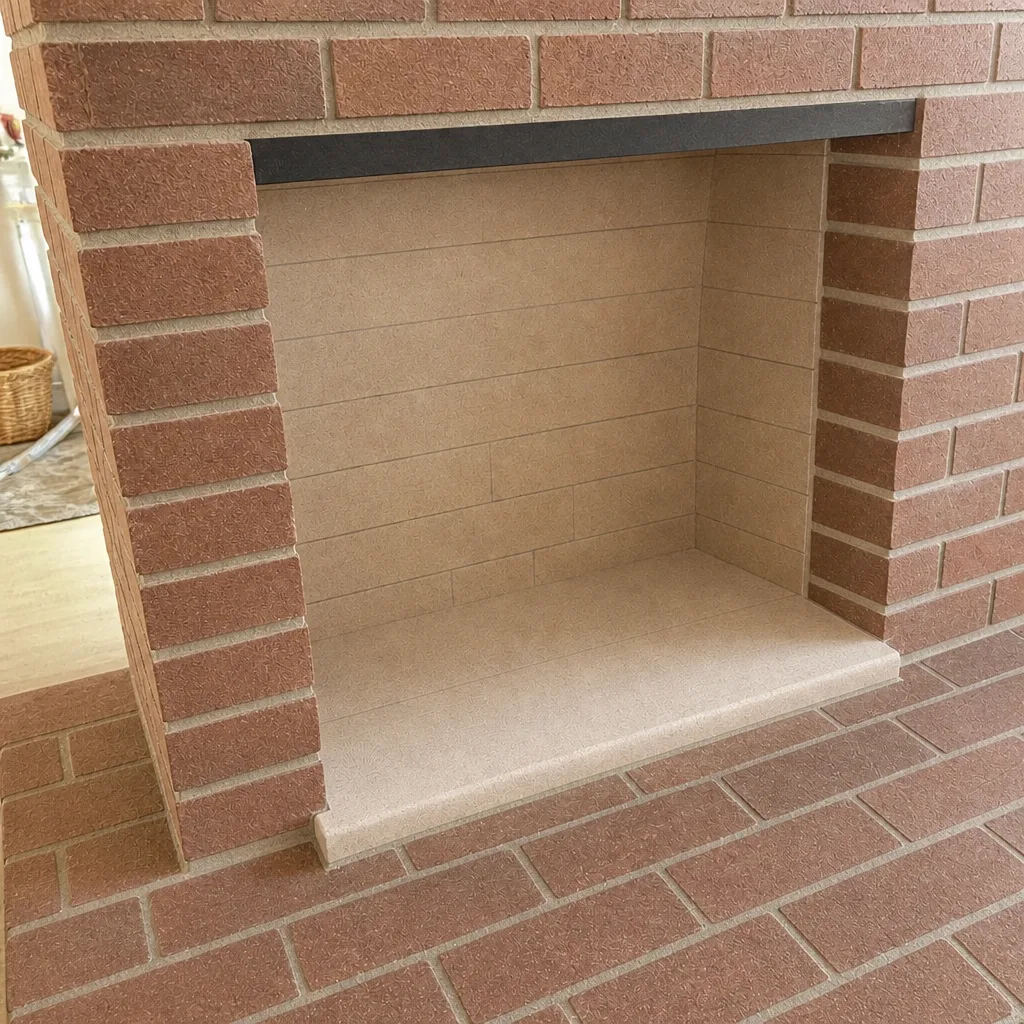
See the difference
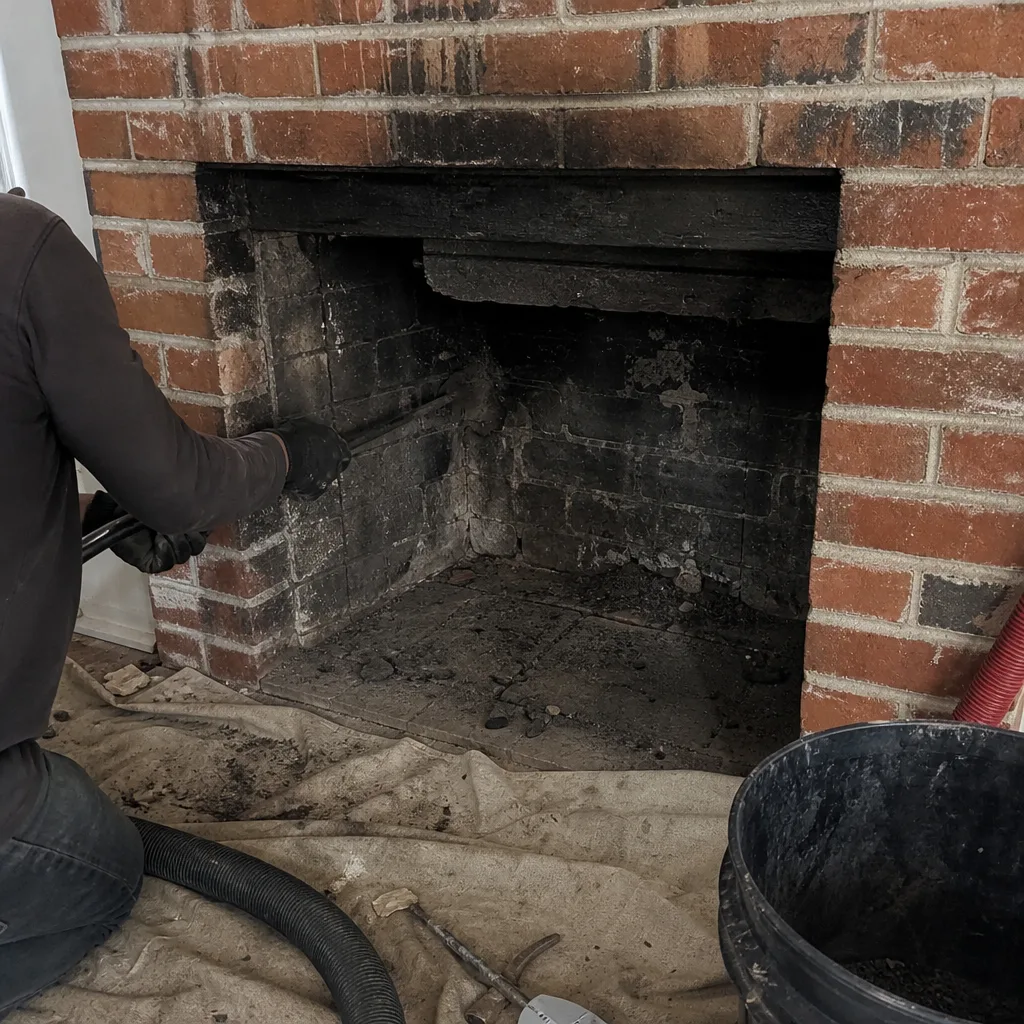 Before
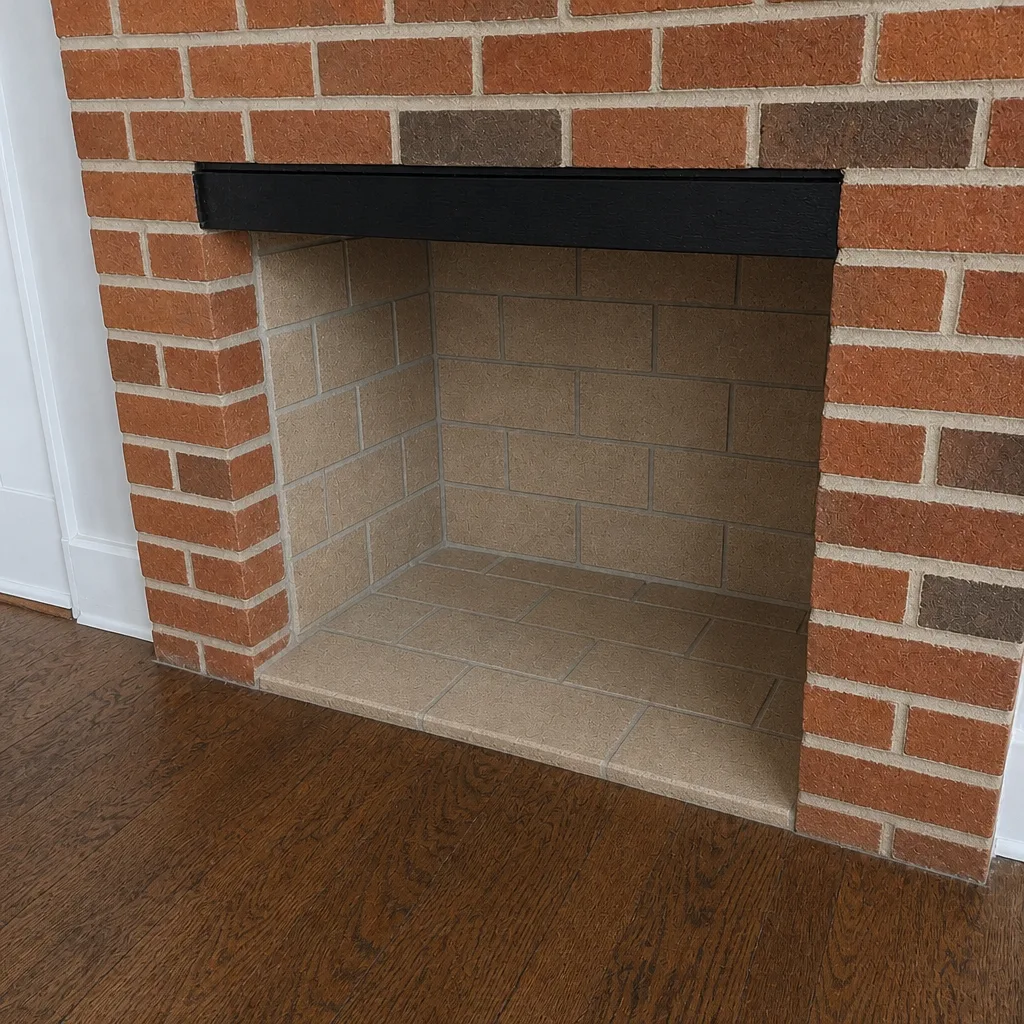 After
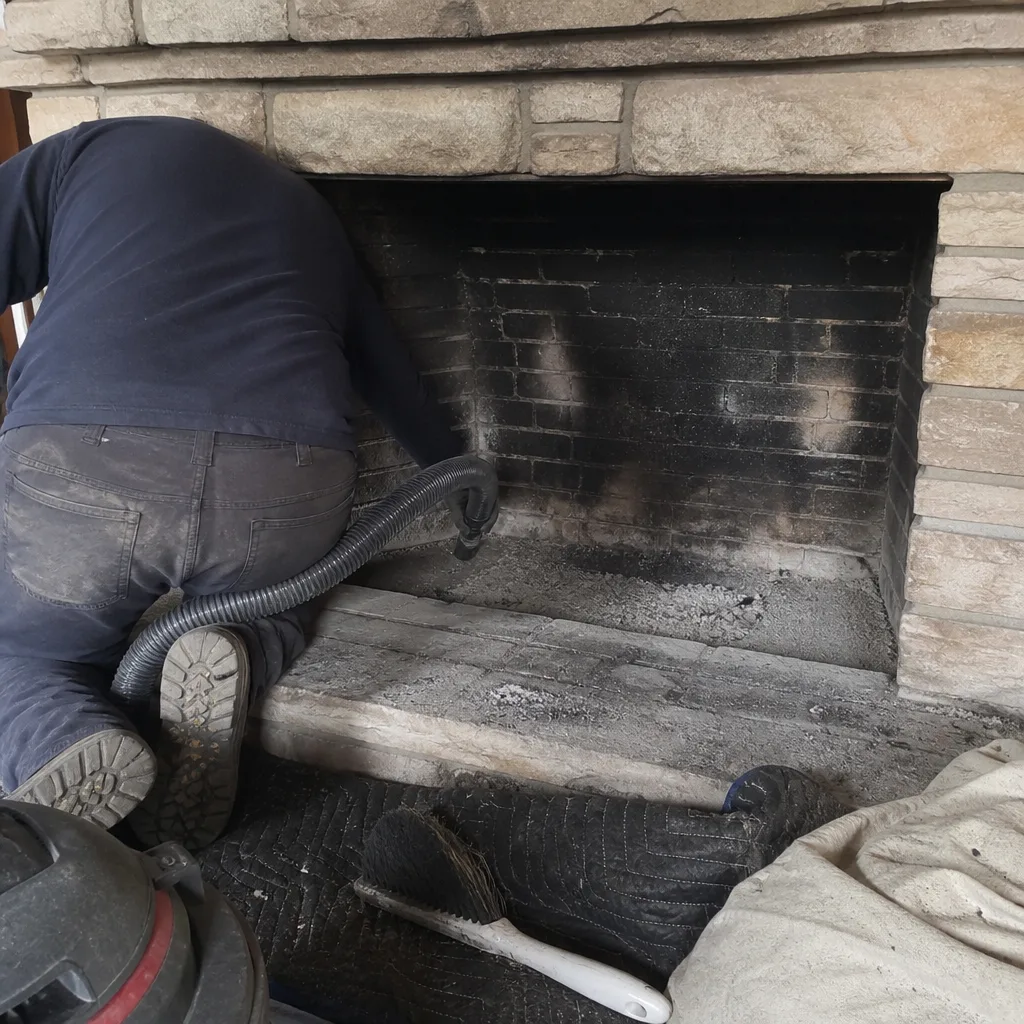 Before
 After
 Before
 After
When to Call a Professional
Some chimney work is routine, and some of it isn’t. Call a professional when you see smoke backing into the room instead of going up the flue, when you smell a strong creosote odor even with the damper closed, when the chimney is visibly damaged from the roof, or when you’ve never had the flue inspected and your home dates to the mid-century build-out. Call before you burn, not after, if you’ve had a chimney fire or you’re switching fuel types. And call if the last cleaning came with a repair recommendation you couldn’t verify; a camera inspection will settle it. Chimney Sweep Harvey Park offers free estimates in Harvey Park. Call (866) 947-8503. We answer 24/7. Fast dispatch from 7am to 7pm, Sunday through Friday. Same-day service is often available.
Frequently Asked Questions
Pricing is set per job by a written estimate after the technician has seen the chimney, so the range depends on your flue configuration and whether the visit includes a camera inspection. We give the estimate in writing before any work begins. Call (866) 947-8503 for an exact quote, and the estimate is free.
Once a year for a regularly used wood-burning fireplace is the standard recommendation, and more often with heavy use or if you’re burning unseasoned wood. In Harvey Park’s older housing, an annual cleaning plus a camera inspection is the safest pattern. Call (866) 947-8503 to book a cleaning.
In Harvey Park’s mid-century homes, a camera inspection is usually the part that matters most. Plenty of these flues have never been examined beyond a quick look, and the condition of the clay tiles can only be confirmed with a camera run. A sweep alone tells you the flue is cleaner, not that it’s sound. Call (866) 947-8503 and ask for a Level 2 inspection with the cleaning.
Creosote builds up in the flue, and over time it moves from a light soot to a crusty stage 2 or glazed stage 3 deposit. Both are combustible, and both are harder to remove than a routine cleaning. Skipping the cleaning also means skipping the inspection, so cracks and crown damage go unnoticed until they’ve done more damage. Call (866) 947-8503 before the heating season starts.
Sometimes. A ceramic resurfacing system like HeatShield can repair a flue whose structural condition allows it, which is one reason we stock it. Whether that’s right for your flue depends on what the camera shows. We work with DuraFlex and Olympia Chimney for full relines when resurfacing isn’t appropriate. Call (866) 947-8503 to schedule an inspection and find out which applies.
You should be able to see the evidence. Nothing should be recommended without camera findings and photos you can review yourself, and if the issue is one that can safely wait, we’ll tell you that too. Call (866) 947-8503 and ask for the documentation before you commit to anything.
The Bottom Line
Chimney cleaning in Harvey Park is the starting point, not the finish line. The sweep clears the flue so the inspection can tell you what’s actually going on inside it, and in the mid-century housing stock that dominates this neighborhood, the inspection is where the real value sits. Know your inspection levels. Understand what creosote stages mean. Read the report with photos beside the findings. Protect the crown and cap so water never gets started. And if the chimney is old and never examined, get a baseline. Chimney Sweep Harvey Park handles the sweep, the inspection, the cap and crown, and the repair, all with one crew. Call (866) 947-8503 for a free estimate. We answer 24/7. Fast dispatch from 7am to 7pm, Sunday through Friday.
Written by the team at Chimney Sweep Harvey Park.